
NJ NY payroll compliance in 2026 is a moving target, and most business owners in New Jersey and New York entered this year already behind. Not because they were not paying attention, but because this year’s regulatory changes came in fast, from multiple directions, and they did not stop.
Wage rates shifted. Tax bases moved. Paid leave contribution rates changed. Pay transparency rules are now in force. If you are still running payroll the same way you were in Q4 2025, there is a good chance you are already out of step with the law.
The good news? You still have time to get ahead of it, but only if you act now. Let’s break it down.

NJ NY Payroll Compliance Starts With Minimum Wage: Do Not Let a Simple Number Cost You
Effective January 1, 2026, New Jersey’s minimum wage rose to $15.92 per hour for employers with six or more employees. Smaller employers, those with five or fewer, are at $15.23. Tipped employees operate under their own rate, but total compensation must still clear the standard minimum threshold.
Across the river, New York continues its tiered approach, with rates varying by region and industry. New York City, Long Island, and Westchester have different floors than the rest of the state, and certain sectors like fast food and healthcare carry their own requirements.
The danger here is not that employers do not know the rate changed. It is that payroll systems were not updated in time, or that overtime calculations still reference last year’s baseline. A missed adjustment compounds with every pay period.
What to do: Audit your payroll system now. Confirm rate changes were applied as of January 1 and that overtime calculations reflect the new base. If you are running payroll manually or with a general accounting tool, this is the moment to reconsider. PayDay Employer Services handles this automatically, updating rates as they change so you do not have to.
NJ Payroll Tax Compliance 2026: Three Numbers Every Employer Needs to Know
Between unemployment, disability, and family leave insurance, New Jersey’s payroll tax structure shifts every year. Here is where things stand for 2026:
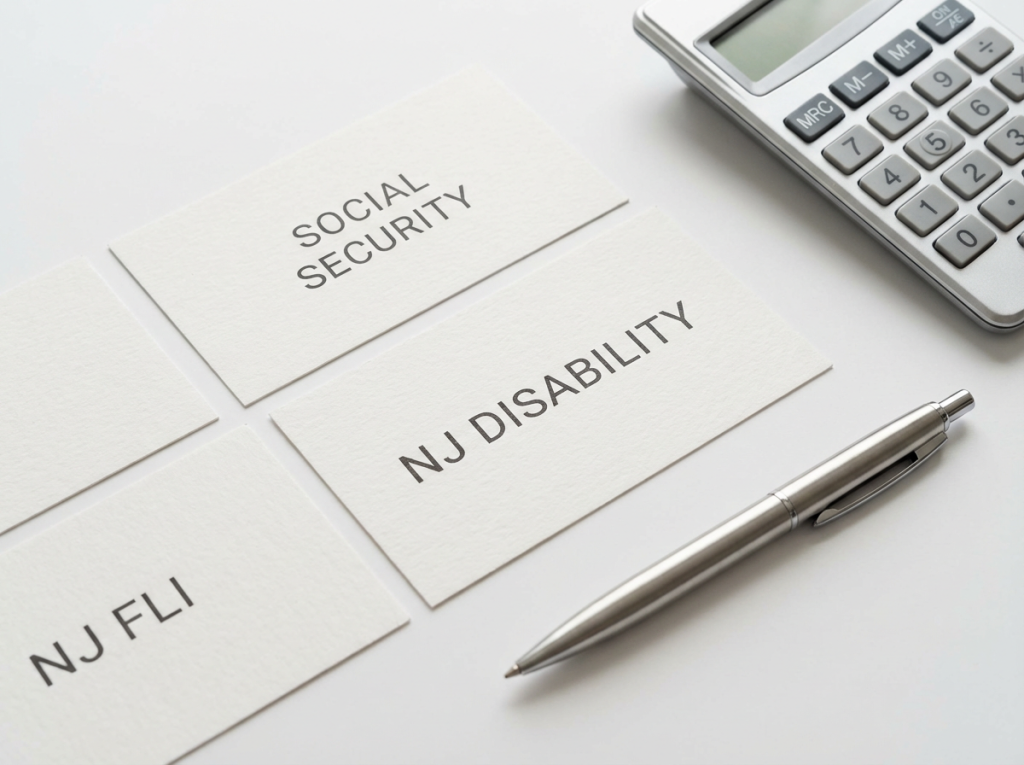
- Social Security wage base: Increased to $184,500 (up from $176,100 in 2025). The rate holds at 6.2% for both employer and employee.
- NJ Unemployment and Disability wage base: Rose to $44,800 for employers. The employee unemployment rate stays at 0.425%, and the disability rate decreased to 0.19%.
- NJ Family Leave Insurance (FLI): Employee contribution rate dropped to 0.23% on a wage base of $171,100, down from a $545.82 maximum to $393.53.
For New York employers, the Paid Family Leave contribution rate for 2026 is 0.432% of gross wages, a modest but real increase from 2025.
Critical reminder: New Jersey now requires all payroll tax payments to be submitted electronically. There is no longer an option to phone in payments. If your process has not been updated to reflect this, you are already non-compliant.
What to do: Review your payroll configuration against the 2026 rate schedule. The team at PayDay Employer Services runs this check proactively for every client before each pay period.
NJ Pay Transparency Rules Are in Effect: Are Your Job Postings Compliant?
New Jersey’s pay transparency law has been active since mid-2025, and it is still tripping up employers heading into 2026. Here is the core of what the law requires:
- Employers with 10 or more employees must include salary ranges and a general description of benefits in all job postings, both new external postings and internal promotion opportunities.
- All employers, regardless of size, must provide written notice of pay rates and paydays at hire, before any changes, and cannot prohibit employees from discussing wages.
- Violations carry real enforcement risk. New Jersey has been active in labor law enforcement, and consequences for posting or notification failures can escalate quickly.
Here is where businesses get caught: a job posting that includes a title and responsibilities but no salary range, or one that says ‘competitive compensation’ without a number, is a violation. So is a hiring manager who warns employees not to discuss salaries.
What to do: Audit every open job posting today. Review your onboarding process to confirm written pay notifications are in place at hire. Train any manager involved in recruiting or compensation conversations. PayDay ES Talent Acquisition services can help you build compliant job posting templates and onboarding workflows.
Dependent Care FSA Limit Increase: A 2026 Benefit Your Employees Do Not Know About
Starting January 1, 2026, the annual pretax contribution limit for Dependent Care FSAs increased from $5,000 to $7,500 for joint filers, a result of federal legislation passed in mid-2025. For employees with children in childcare, this is a meaningful tax advantage.
The catch? Most employees do not know about it unless their employer tells them. And most employers have not updated their benefits communications to reflect it.
Employers who offer Section 125 plans also need to confirm their plan documents have been amended to allow the higher contribution. Running last year’s configuration in this year’s system creates both a compliance issue and a missed opportunity to support your workforce.
What to do: Communicate this benefit increase to all eligible employees. Confirm plan documents are updated. The Benefits team at PayDay Employer Services can review your current plan design and confirm it is aligned with 2026 rules.
Worker Classification and NJ NY Payroll Compliance: The ABC Test Is Still Moving
Independent contractor classification has been a flashpoint in New Jersey for years, and 2026 is no exception. The NJ Department of Labor’s proposed regulations to codify the ABC test, which determines whether a worker is an employee or a contractor, are still evolving after legislative challenges late in 2025.
What this means practically: if you are using contractors, the legal standards are under active review. Workers who do not satisfy all three prongs of the ABC test are presumed to be employees under New Jersey law, triggering payroll taxes, benefits eligibility, and other obligations.
Misclassification is not just a compliance risk. It is a back-pay risk. In a state that aggressively enforces worker protection laws, it is a liability that can surface during audits or employee complaints long after the fact.
What to do: Review your contractor roster with employment counsel. If you are unsure whether a classification holds up under current NJ standards, err toward caution. PayDay ES HR advisors can help you evaluate your worker relationships and structure arrangements that reduce exposure.

The Bottom Line: NJ NY Payroll Compliance in 2026 Requires a System, Not a Spreadsheet
Employment law in New Jersey and New York has never been a ‘set it and forget it’ environment. But 2026 is proving to be a particularly demanding year, with rate changes, new pay transparency rules, updated tax bases, expanded benefits limits, and still-evolving classification standards all converging at once.
The NJ Department of Labor and the NY Department of Labor both continue to issue guidance and enforcement actions at a pace that makes manual tracking unsustainable for most small and midsize employers.
The businesses that stay compliant do not do it by reading alerts and hoping nothing slips through. They partner with people whose job it is to stay current, so theirs does not have to be.
That is what we do at PayDay Employer Services. From payroll processing and tax filings to HR support, benefits administration, and time and labor management, we have helped over 5,000 clients across NJ, NY, and beyond stay compliant without making it their second job.
Ready to get compliant and stay that way? Talk to a PayDay Employer Services specialist today: paydayes.com/contact