

Multi-state payroll compliance has quietly become one of the most underestimated risks for growing businesses. Remote and hybrid work have scattered employees across state lines, but payroll processes haven’t evolved at the same speed.
Every new work location introduces a new set of tax, wage, and employment rules and most of them aren’t optional, negotiable, or forgiving.
When those rules are missed or misunderstood, the fallout is predictable: penalties, retroactive corrections, audits, and employees losing confidence that they’re being paid correctly.
Here’s what employers consistently overlook and what actually keeps them out of trouble.
1. Payroll Rules Follow the Employee Not the Company
The single biggest misunderstanding in payroll compliance is assuming your company’s location controls the rules. It doesn’t.
Payroll obligations are determined by where the employee performs the work, not where your headquarters, payroll provider, or bank account lives.
That means even one employee working in another state can immediately trigger:
- State income tax withholding requirements
- State unemployment insurance (SUI) registration
- City or county payroll taxes
- Paid sick leave or paid family and medical leave (PFML) laws
- Mandatory employee notices and postings
- Business registration or tax nexus obligations
This applies whether the work is permanent, temporary, or “just for a few months.” From a compliance standpoint, states rarely care about intent — they care about activity.
Key reality:
If an employee is physically working in a state, you have payroll responsibilities there. Waiting until “it becomes permanent” is how issues pile up quietly in the background.
2. Why Multi-State Payroll Keeps Getting Harder
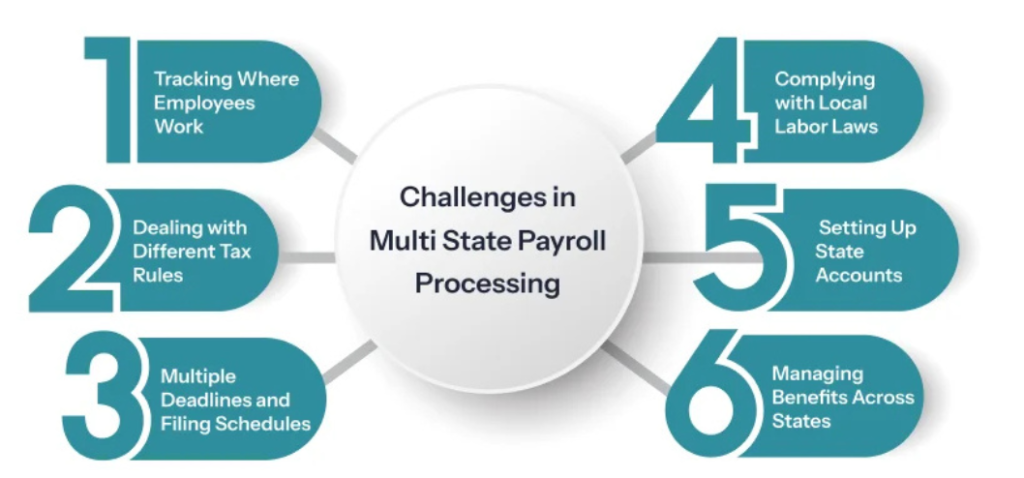
Multi-state payroll used to be manageable because workforces were predictable. That’s no longer the case.
States now change payroll-related rules constantly. Tax rates, minimum wages, leave programs, contribution splits, reporting deadlines. At the same time, remote work and employee mobility have removed the clear lines employers used to rely on.
What’s driving the complexity:
- Expansion of paid sick leave and PFML programs
- Rapid growth of city and county-level payroll taxes
- Remote employees creating tax and employment nexus
- Annual (and sometimes mid-year) minimum wage increases
- Faster and more frequent changes to withholding rules
The important shift to understand is this: Payroll is no longer a “set it and forget it” function. It’s a compliance system that requires regular review, even when nothing appears to have changed.
3. The Most Common Multi-State Payroll Mistakes
Most compliance failures don’t come from bad intentions, they come from assumptions.
The most common ones include:
- Running payroll before registering with the state
- Assuming payroll software automatically ensures compliance
- Withholding taxes for the employer’s state instead of the employee’s
- Applying federal rules where state law is stricter
- Failing to track employee moves or extended travel
- Missing state new-hire reporting deadlines
- Miscalculating PFML contributions, which vary by state and change often
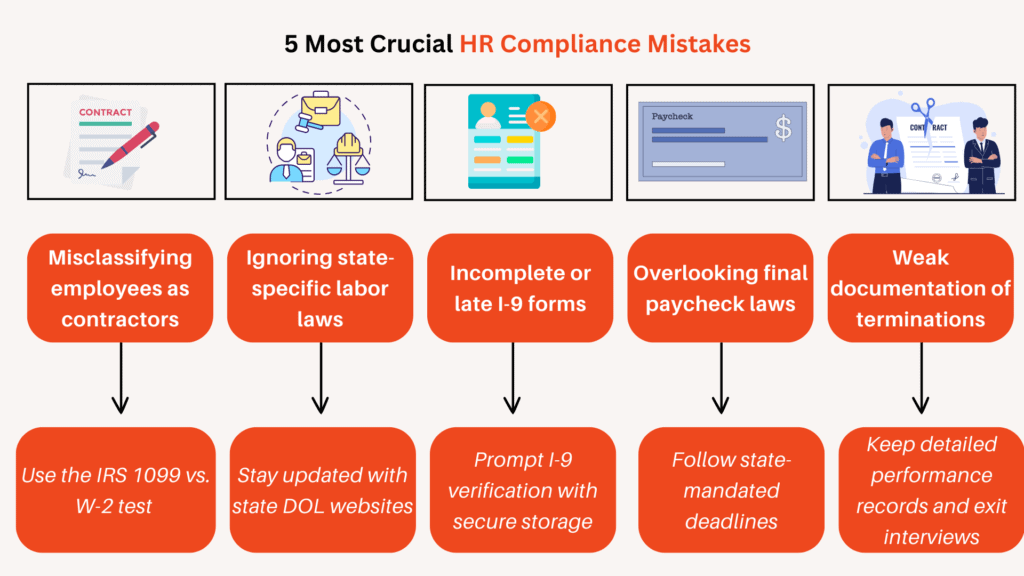
Individually, these mistakes can seem minor. In practice, they compound. One missed registration leads to backdated taxes. One incorrect withholding leads to employee complaints. Enough small errors attract audits and penalties.
These are the issues that turn payroll into a clean-up project instead of an operational function.
4. How Employers Can Stay Compliant (Without the Stress)
The employers who stay compliant don’t rely on luck or better software. They rely on process.
A few habits eliminate most multi-state payroll risk:
- Maintaining a state-by-state compliance checklist that’s actively used
- Registering with state agencies before hiring or issuing pay
- Standardising onboarding steps for employees in new states
- Reviewing payroll settings quarterly to catch law and rate changes
- Training managers that out-of-state work requires HR approval first
These steps aren’t complex, but they require discipline. The payoff is fewer corrections, fewer surprises, and far less time spent fixing avoidable problems.
Staying Ahead of Multi-State Payroll Risks
Multi-state payroll compliance is no longer a one-time setup. It’s an ongoing responsibility tied directly to how and where your people work.
As remote work continues to expand and state laws keep evolving, the employers who avoid payroll issues are the ones who stay proactive, consistent, and informed.
With the right processes in place, payroll becomes manageable instead of reactive and compliance issues get addressed early, not discovered after penalties arrive.
*******@******es.com?subject=Email%20from%20blog%20article&body=Name:%0D%0ACompany:%0D%0APhone:%0D%0A%0D%0AComments:”>Contac*******@******es.com?subject=Email%20from%20blog%20article&body=Name:%0D%0ACompany:%0D%0APhone:%0D%0A%0D%0AComments:” target=”_blank” rel=”noreferrer noopener”>t*******@******es.com?subject=Email%20from%20blog%20article&body=Name:%0D%0ACompany:%0D%0APhone:%0D%0A%0D%0AComments:”> us to discuss your multi-state payroll compliance needs and ensure your payroll processes align with current state and local requirements.